


 Menu
Menu


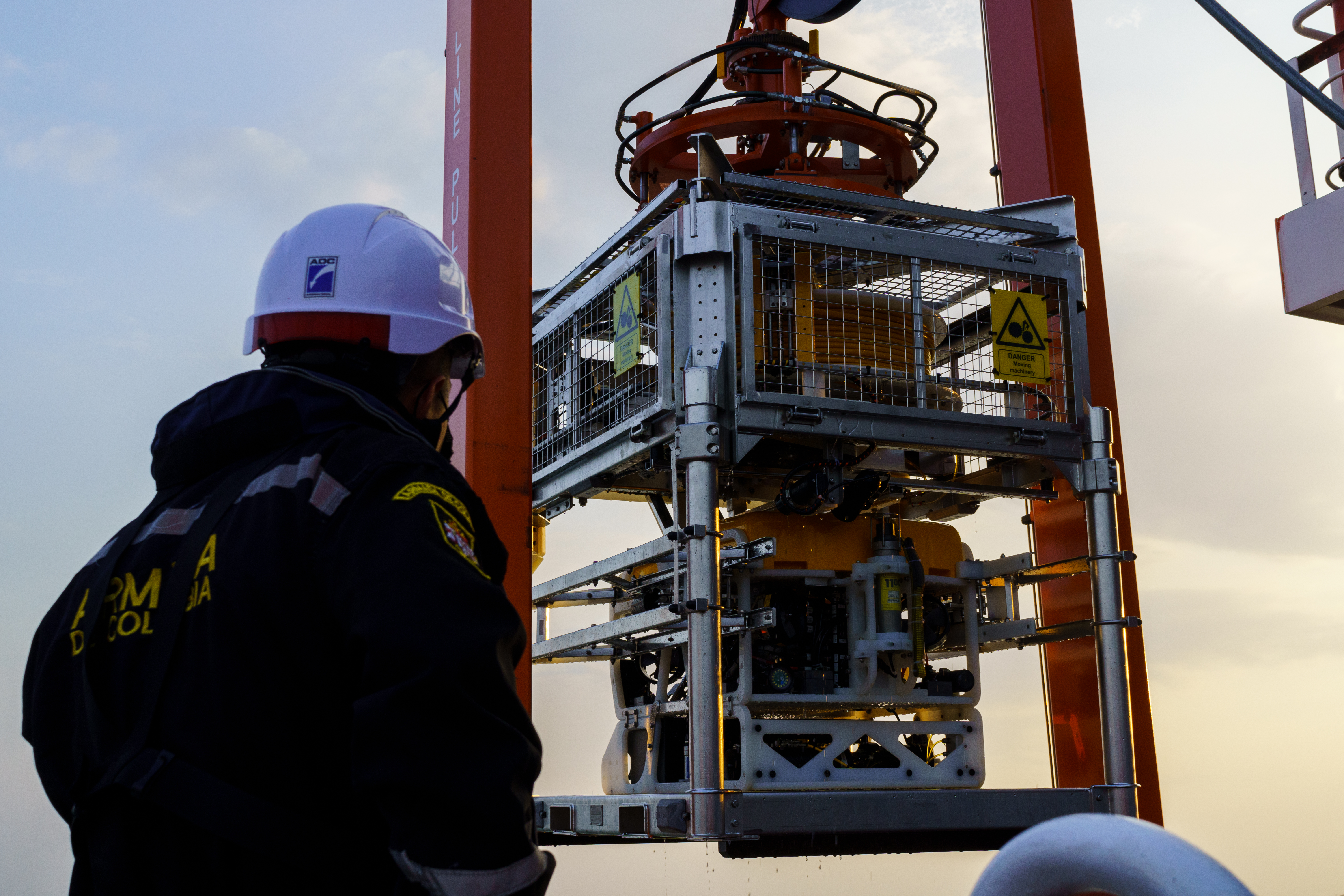
Seaeye-lynx-on-mission-to-survey-the-san-jose_copyright-colombian-navy
Often referred to as the “Holy Grail of shipwrecks,” San José sank in 1708 off the coast of Colombia during the War of the Spanish Succession, taking with it a substantial part of the maritime, commercial and cultural history of one of the last galleons of the Spanish Indies trade.
Operated by the Colombian Navy, the Lynx was used in multiple deep-sea survey missions. These missions captured high-resolution imagery and three-dimensional photogrammetry of the wreck at approximately 600 meters depth. They also included recovering and documenting artefacts such as a cannon, three gold coins, Chinese porcelain cups and sediment samples for further analysis and laboratory studies to support their research and protection.
Jon Robertson, Managing Director at Saab Seaeye, said:
“Lynx has a long history of delivering reliable subsea inspection capabilities, and its use on the San José project demonstrates how proven technology can support complex deep-sea archaeological work.”
Seaeye Lynx is used internationally for subsea survey and inspection tasks. Its role at the San José site forms part of a wider effort by Colombian authorities to document and preserve underwater cultural heritage.
Read more about the Seaeye Lynx here: https://www.saabseaeye.com/solutions/underwater-vehicles/lynx


 Twitter
 Linkedin